

















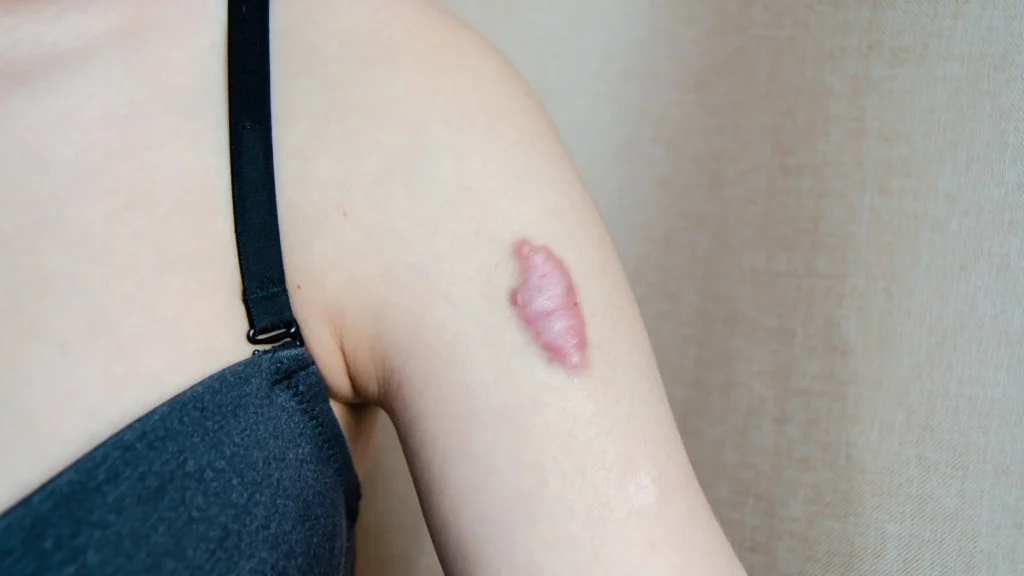
Keloids are considered medically permanent because they don’t spontaneously resolve without treatment. However, “permanent” doesn’t mean untreatable; with proper intervention, keloids can be removed, flattened, or significantly improved.
Understanding what permanence means in the context of keloids helps you make informed decisions about whether and when to seek treatment.
What Does “Permanent” Mean for Keloids?
Medical permanence differs from “forever unchangeable”. Keloids remain indefinitely without intervention but respond to appropriate treatment.
Keloids Don’t Self-Resolve
Unlike normal scars that fade over time, keloids persist indefinitely without treatment. They may stabilise after initial growth but won’t shrink or disappear naturally. This permanent nature distinguishes keloids from hypertrophic scars which sometimes improve spontaneously.
Growth Patterns Over Time
Some keloids grow continuously for months or years, whilst others stabilise relatively quickly. Even stable keloids can resume growth years later due to trauma or hormonal changes. This unpredictable behaviour makes monitoring important even for long-standing keloids.
Permanence vs Treatability
Permanent doesn’t mean unchangeable. Modern treatment can remove keloids surgically, flatten them with injections, or improve appearance with lasers. The challenge isn’t removing keloids but preventing recurrence after treatment, which requires comprehensive protocols.
Why Keloids Don’t Disappear Naturally
Normal scars balance collagen production with breakdown, gradually fading over time. Keloids show continuous collagen accumulation without normal regulatory mechanisms. Abnormal fibroblast activity produces excessive collagen indefinitely, resisting normal shutdown signals. Without intervention, this biological dysfunction continues permanently.
Treatment Can Remove or Improve Keloids
| Treatment Type | Permanence Impact | Recurrence Risk |
| Steroid Injections | Flattens 60-80%, doesn’t remove | Moderate if stopped |
| Surgical Excision Alone | Complete removal | 50-80% recurrence |
| Surgery + Aftercare | Complete removal | 10-20% recurrence |
| Laser Therapy | Improves appearance | Low when maintained |
| Cryotherapy | Reduces volume 40-60% | Moderate |
Steroid Injections
Triamcinolone injections flatten keloids by reducing inflammation and collagen production. Regular treatments over months can achieve 60-80% flattening in responsive keloids. However, treatment costs must be weighed against benefits, and stopping injections risks regrowth.
Surgical Removal
Complete surgical excision physically removes keloid tissue, addressing permanence directly. However, surgery alone shows 50-80% recurrence rates as the wound healing triggers new keloid formation. Comprehensive protocols combining surgery with radiation, injections, or pressure therapy reduce recurrence to 10-20%.
Combination Approaches
Modern keloid management uses multiple treatments simultaneously or sequentially. Comprehensive protocols combining surgery, post-operative injections, and adjuvant therapies achieve best long-term outcomes. This multi-modal approach addresses permanence whilst minimising recurrence.
Understanding Keloid Recurrence
The same genetic and biological factors causing initial keloids remain active after treatment. Most recurrences appear within 6-12 months, though some develop years later. Successful long-term management requires maintenance therapy preventing recurrence through periodic injections, pressure garments, or silicone application. Keloid treatment represents ongoing management rather than one-time cure.
Factors Affecting Treatment Success
Younger patients show higher recurrence rates due to more active healing. Ear, chest, and shoulder keloids in high-tension areas recur more than other locations. Smaller, newer keloids respond better than large, long-standing ones. Rapidly growing keloids require more aggressive intervention for permanent control.
Are Treated Keloids Truly Gone Forever?
“Cured” rarely applies to keloid treatment. More accurately, keloids become controlled or managed rather than permanently eliminated.
Defining Treatment Success
Success means achieving acceptable appearance, eliminating symptoms, and preventing significant regrowth. Most patients consider treatment successful if keloids remain flat and asymptomatic even if slight discolouration persists. Complete restoration to normal skin rarely occurs.
Long-Term Stability
With proper maintenance, many treated keloids remain controlled indefinitely. Patients who adhere to follow-up protocols often maintain improvement for decades. However, this requires ongoing commitment rather than expecting permanent cure.
Realistic Expectations
Treatment transforms keloids from growing, symptomatic lesions to flat, stable scars. This dramatic improvement enhances quality of life even if permanent cure remains elusive. Understanding realistic outcomes prevents disappointment and supports informed consent.
Living with Untreated Keloids and Prevention
Small, stable keloids causing minimal symptoms may not require treatment. Monitor untreated keloids with periodic photographs to track any changes. If growth resumes or psychological distress develops, reconsider treatment.
For keloid-prone individuals, prevention proves more effective than treatment. High-risk people should avoid unnecessary piercing or tattoos. Early intervention on scars showing keloid signs prevents progression to large, permanent lesions. Proper wound care and early acne treatment reduce keloid risk.
Treatment Access and Maintenance
NHS treatment provides basic steroid injections with limited sessions. Private clinics offer comprehensive protocols combining multiple modalities with proper maintenance programmes, improving chances of permanent control.
After initial improvement, periodic injections every 6-12 months often prevent recurrence. Lifetime management may cost £200-£500 annually, proving more cost-effective than treating recurrent keloids. Success requires patient commitment to ongoing follow-up and maintenance treatments.
Conclusion
Keloids are medically permanent without treatment, persisting indefinitely rather than fading naturally. However, modern treatment can remove or significantly improve keloids, with comprehensive protocols achieving long-term control in most patients. Success requires realistic expectations, proper treatment selection, and commitment to maintenance rather than expecting one-time permanent cure.
Frequently Asked Questions
Will my keloid ever go away on its own?
No, keloids never spontaneously resolve without treatment. Unlike normal scars or hypertrophic scars that improve over time, keloids persist indefinitely. They may stabilise after initial growth but won’t shrink or disappear naturally. Treatment remains necessary for any improvement.
Can keloids be permanently removed?
Keloids can be physically removed through surgical excision, but recurrence rates reach 50-80% with surgery alone. Combining surgery with comprehensive aftercare (radiation, injections, pressure therapy) reduces recurrence to 10-20%. Most patients achieve long-term control with proper protocols rather than absolute permanent cure.
Why do keloids come back after treatment?
Genetic predisposition and abnormal wound healing that caused initial keloids remain active after treatment. The wound created by keloid removal can trigger new keloid formation. Without comprehensive aftercare addressing these factors, recurrence becomes likely. Maintenance treatment helps prevent regrowth.
How long do I need to do maintenance treatment?
Maintenance requirements vary individually. Some patients need periodic injections for several years, whilst others achieve stability allowing treatment discontinuation. Many patients require some level of ongoing monitoring indefinitely. Your specialist determines appropriate maintenance based on keloid behaviour.
Are small keloids permanent too?
Yes, even small keloids persist permanently without treatment. Size doesn’t affect permanence, though smaller keloids often respond better to treatment. Early intervention on small keloids prevents progression to larger lesions requiring more aggressive management.
Can I prevent keloids from becoming permanent?
Prevention focuses on avoiding keloid formation in high-risk individuals. Once a keloid forms, it’s already permanent unless treated. However, early treatment of developing keloids prevents progression to large, severe keloids. Catching keloids early makes management easier.
Is it worth treating permanent keloids?
Treatment significantly improves quality of life for most patients despite keloids’ permanent nature. Achieving flat, symptom-free scars represents meaningful success even if slight discolouration persists. The psychological and functional benefits of treatment typically justify the investment for symptomatic or visible keloids.