












Chemical Peels


Chemical peels are a well established aesthetic procedure that can deliver profound rejuvenating effects. Chemical peels involve applying specific solutions over the skin to produce a controlled reaction to remove certain layers of the skin and provide a deep exfoliation. Chemical peels are used for the purposes of tightening and to an extent levelling of the skin. They also help with the appearance of fine lines and wrinkles, pigmentation problems and help to soften and improve scars. Skin has smoother texture, enhanced glow and more even pigmentation.
How does it work?
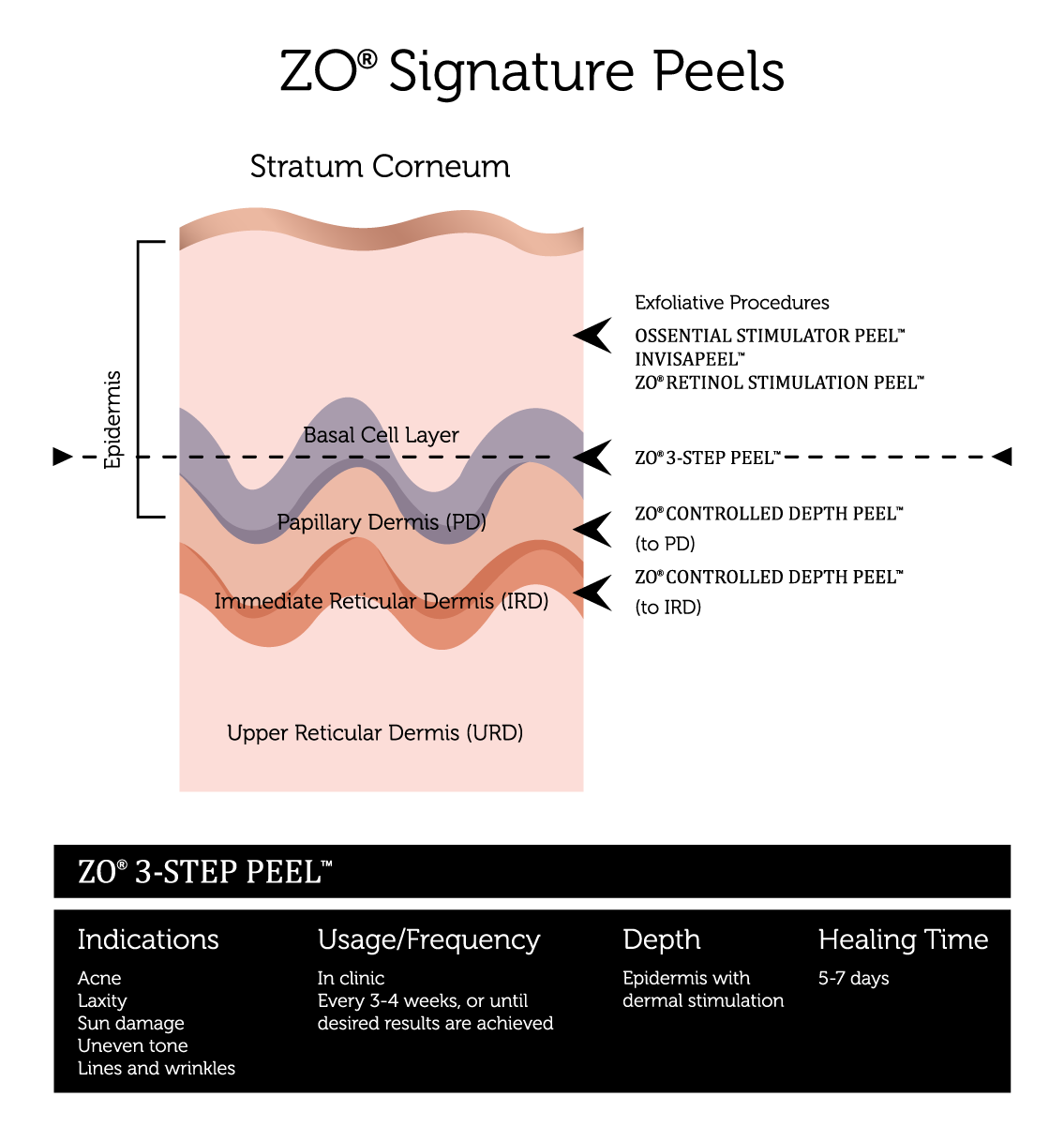
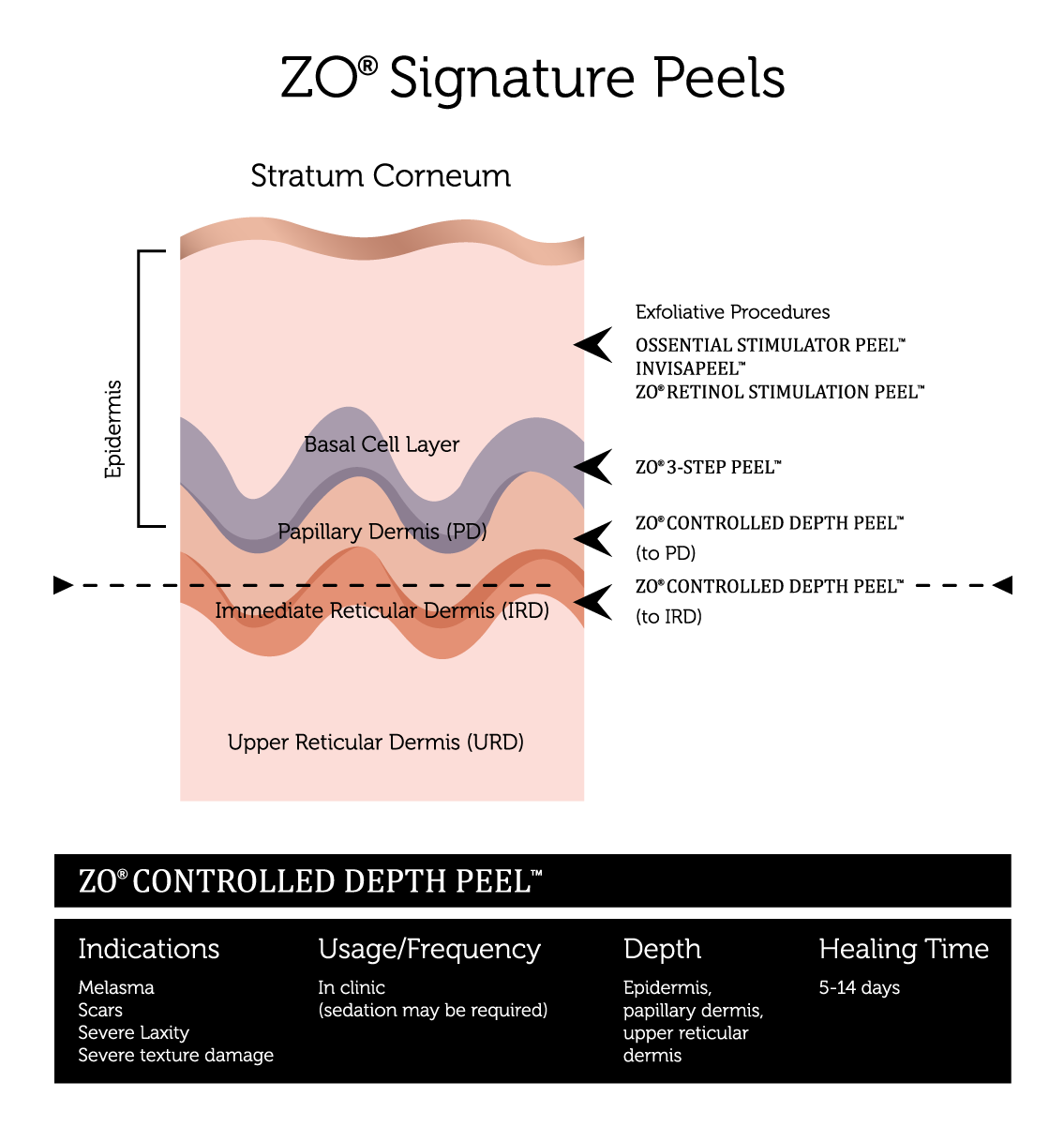
The skin is composed of two layers. The top layer is the epidermis and the bottom layer is the dermis. The dermis is further divided into the papillary dermis and deeper reticular dermis. Fine lines, wrinkles and scars result in imperfections in the skin and can involve parts of the epidermis only or go as deep as the dermis. Pigmentation problems, specifically hyperpigmentation is usually the result of problems at the level of the epidermal dermal junction. Chemical peels penetrate the skin down to different levels depending upon their strength. The stronger the peels the deeper they penetrate and the more layers they remove. Afterwards the skin is left to regenerate the layers that have been removed improving appearance, texture and elasticity. The epidermis is thicker and there is a degree of collagen and elastin stimulation.
Personalised Skin Rejuvenation using AI
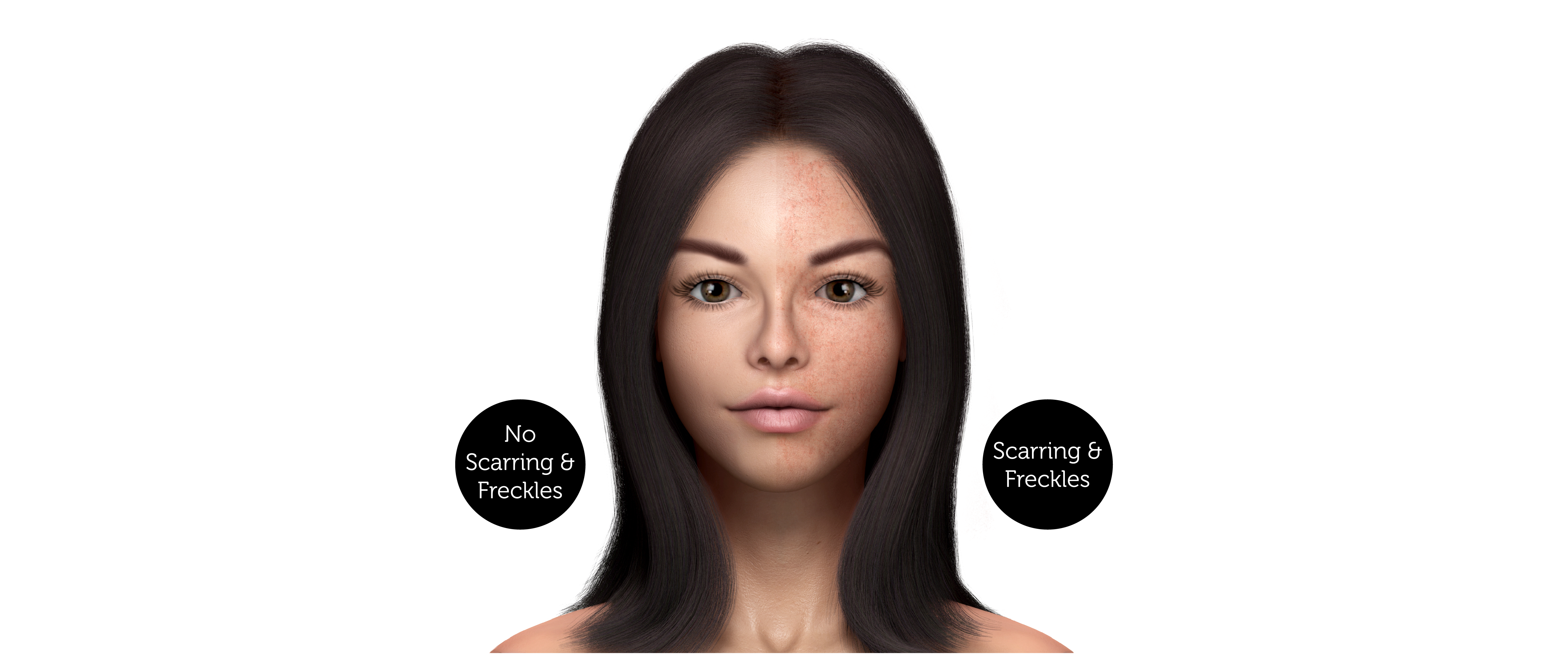
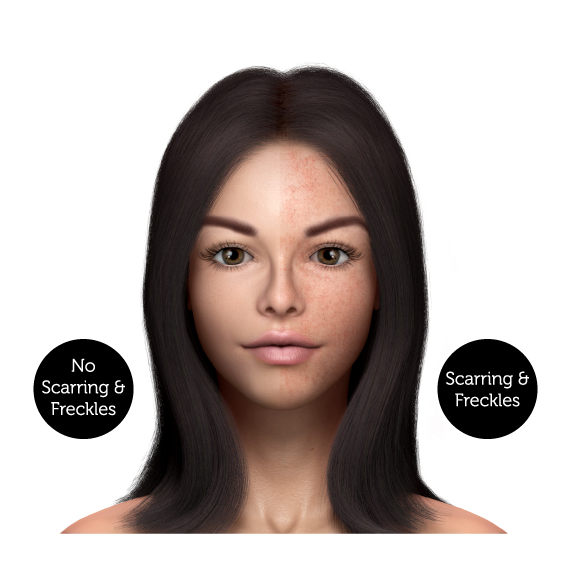
During your consultation, we use a combination of clinical expertise and advanced skin analysis technology to determine the most suitable treatments for your skin. Our doctors and practitioners utilise the OPATRA facial analysis system, which provides detailed imaging and assessment of multiple skin parameters including texture, pigmentation, pores, sun damage and underlying skin quality.
The results from this analysis are then interpreted alongside our AI-empowered clinical decision support tool, which helps compare your skin findings with the latest published medical evidence for treatments such as chemical peels, laser resurfacing and targeted scar therapies. This allows us to identify treatment combinations that are most likely to deliver meaningful improvements based on both scientific data and real-world clinical outcomes.
By combining advanced diagnostic technology, evidence-based treatment planning and the experience of our doctors and aestheticians, we are able to design personalised skin rejuvenation plans tailored to your individual skin concerns. This approach helps ensure that every patient receives the most appropriate and effective treatments available at Rejuvence Clinic, with the goal of achieving natural, long-lasting improvements in skin health, texture and radiance.
TCA CROSS for Ice Pick Acne Scars
For patients with deep ice pick acne scars, standard chemical peels are often not enough on their own. This is where TCA CROSS can play an important role. TCA CROSS stands for Chemical Reconstruction Of Skin Scars and is a highly targeted technique in which a high-strength form of trichloroacetic acid (TCA) is applied directly into individual deep scars rather than across the whole skin surface. Unlike a standard peel, which treats broader areas of the skin more evenly, TCA CROSS is designed specifically for narrow, deep, sharply defined scars, particularly ice pick scars, where deeper collagen remodelling is needed. Published studies and reviews have described TCA CROSS as a useful treatment option for atrophic acne scars, with particular relevance for ice pick scar morphology.
How TCA CROSS Differs from Standard Chemical Peels
TCA CROSS is a much stronger and more focused treatment approach than a conventional superficial or medium-depth chemical peel. Standard peels are used to improve overall skin tone, brightness, pigmentation and mild textural change, whereas TCA CROSS is used to treat individual deep scar defects.
In published dermatology literature, standard TCA peels are typically discussed at lower concentrations, while TCA CROSS uses high-strength focal application, commonly in the 70% to 100% range, to create a controlled response inside the scar itself.
This localised treatment helps stimulate collagen repair within the scar, making it especially useful where ordinary peels may have limited effect.
Published Medical Evidence for TCA CROSS in Ice Pick Scars
The TCA CROSS technique was described in a 2002 study by Lee et al., which reported good clinical responses in patients with atrophic acne scars, including darker skin types, using focal high-strength TCA rather than a full-face peel. A later 2010 pilot study by Bhardwaj and Khunger specifically evaluated 100% TCA CROSS in predominant ice pick acne scars and concluded that the technique was safe, efficacious, cost-effective and minimally invasive, while also noting that repeat sessions are important and that results can depend on the individual healing response. More recent review literature continues to describe TCA CROSS as an effective option for ice pick scarring, and procedural acne scar reviews emphasise that it is particularly valuable when scar treatment is tailored to scar type rather than using a one-size-fits-all approach.
Combining TCA CROSS with Laser Resurfacing
At Rejuvence Clinic, TCA CROSS may be used as part of a combined treatment strategy for more severe acne scarring. This is important because deep ice pick scars and more widespread surface textural change often need to be treated differently.
TCA CROSS can target the depth of the individual scar, while laser resurfacing can improve the surrounding skin texture, blending, tone and collagen renewal across the wider treatment area.
Dermatology reviews note that acne scars are often best managed with combination treatment plans, particularly where multiple scar types are present.
A More Advanced Option for Severe Acne Scarring
For suitable patients, combining TCA CROSS with laser resurfacing can provide a more advanced and comprehensive approach than standard peels alone. Chemical peels may still help with brightness, superficial pigmentation and mild irregularity, but for deep, sharply indented acne scars, a more targeted treatment plan is often required. This is why patients with more severe acne scarring are often assessed for a combination approach that addresses both the deeper scar structure and the overall skin surface. Treatment suitability always depends on scar type, skin type and clinical assessment.
Advanced Skin Resurfacing with Laser Technology
While chemical peels remain a popular and effective treatment for improving skin tone and texture, modern laser resurfacing technologies can offer a more precise and controlled approach to skin rejuvenation. At Rejuvence Clinic, we use advanced medical-grade laser systems including the Aerolase Era Elite (Erbium:YAG) and Aerolase Neo Elite to deliver highly customised resurfacing treatments for patients seeking deeper skin renewal and collagen stimulation.
Laser resurfacing works by delivering controlled energy into the skin to remove damaged superficial layers while simultaneously stimulating the body’s natural healing and collagen production processes. This approach allows us to treat concerns such as uneven skin texture, acne scars, pigmentation, fine lines and sun damage with exceptional precision.
Chemical Peels vs Laser Resurfacing: Understanding the Difference
Chemical peels improve the skin by applying specialised acids that cause the outer layers of skin to exfoliate and regenerate. The depth of treatment depends on the strength of the peel used.
Laser resurfacing, however, works in a fundamentally different way. Instead of relying on chemical exfoliation, laser energy precisely targets water within the skin, allowing controlled removal of damaged tissue and stimulation of deeper skin remodelling.
This precision allows laser treatments to:
- Deliver more controlled resurfacing
- Target specific skin depths with accuracy
- Stimulate greater collagen production
- Improve texture, scarring and deeper lines more effectively
For many patients, particularly those with acne scarring, sun damage or advanced skin ageing, laser resurfacing can provide more significant and longer-lasting improvements than chemical peels alone.
Aerolase Era Elite Laser Resurfacing (Erbium:YAG)
At Rejuvence Clinic we utilise the Aerolase Era Elite Erbium:YAG laser, a state-of-the-art resurfacing technology designed to safely remove damaged skin layers while encouraging powerful skin regeneration.
The Era Elite works by precisely ablating microscopic layers of the skin, triggering the body’s natural repair mechanisms and stimulating new collagen formation. This process helps improve:
- Fine lines and wrinkles
- Acne scars and textural irregularities
- Sun damage and pigmentation
- Enlarged pores
- Overall skin tone and smoothness
The treatment can be customised from gentle skin refresh treatments to deeper resurfacing procedures, depending on your skin concerns and desired results.
Dual Laser Rejuvenation: The Aerolase Reverse Protocol
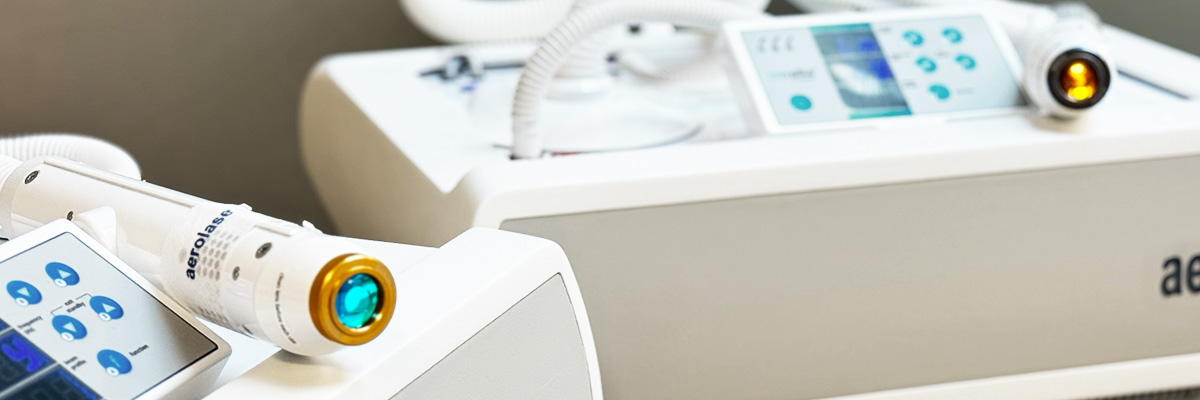
One of the most advanced treatment approaches offered at Rejuvence Clinic is the ability to combine Aerolase Neo Elite and Aerolase Era Elite in a single treatment session.
This unique dual-laser “reverse protocol” allows us to treat multiple layers of the skin simultaneously:
Aerolase Neo Elite
- Penetrates deeper layers of the skin
- Stimulates collagen production
- Improves inflammation, pigmentation and vascular concerns
- Enhances long-term skin quality
Aerolase Era Elite
- Precisely resurfaces superficial skin layers
- Smooths texture and fine lines
- Improves skin clarity and tone
By combining both technologies, we can achieve both deep dermal rejuvenation and superficial resurfacing in the same session, producing comprehensive skin renewal that often exceeds what can be achieved with peels or single-modality treatments alone.
What happens during the treatment in clinic?
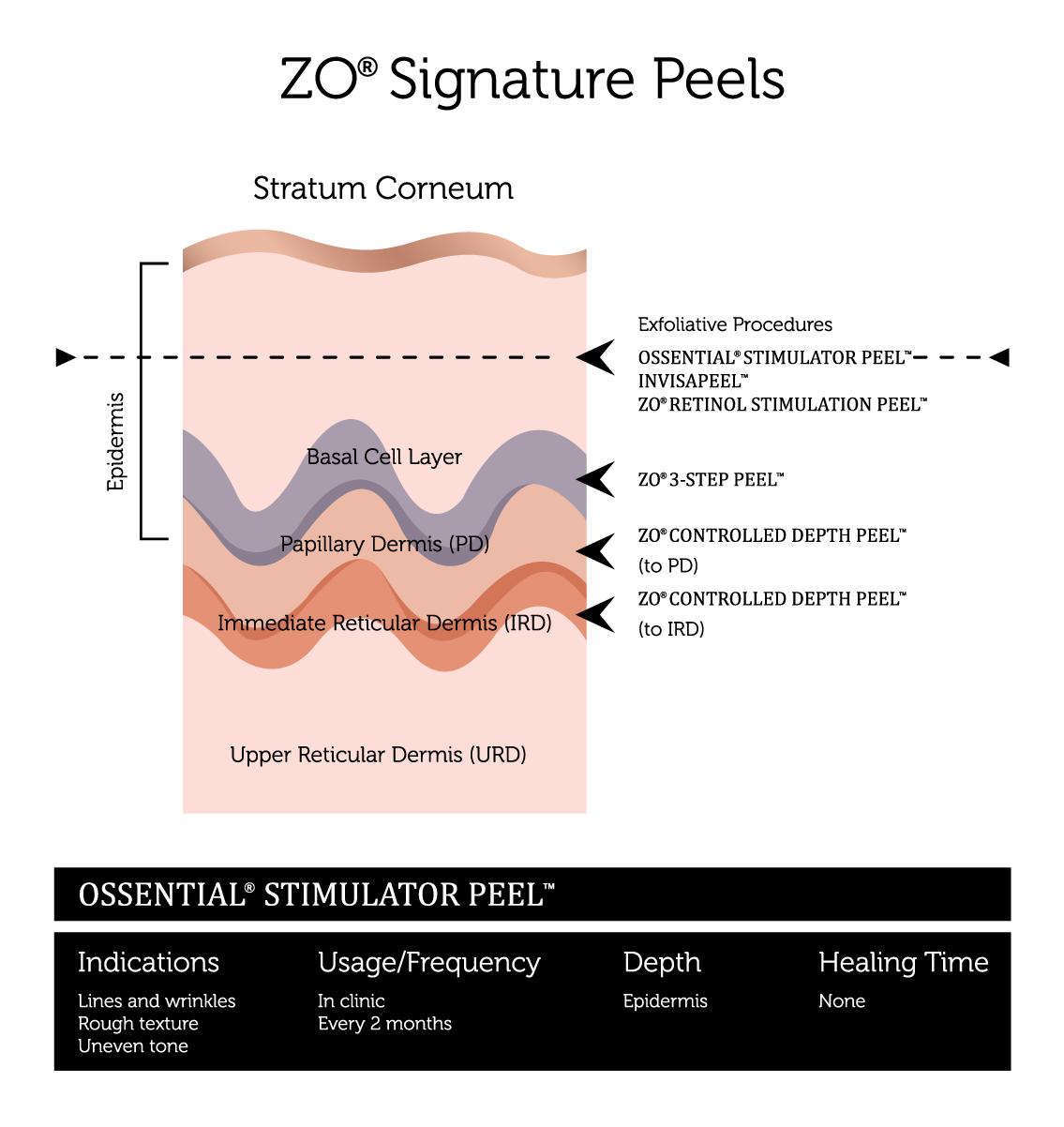
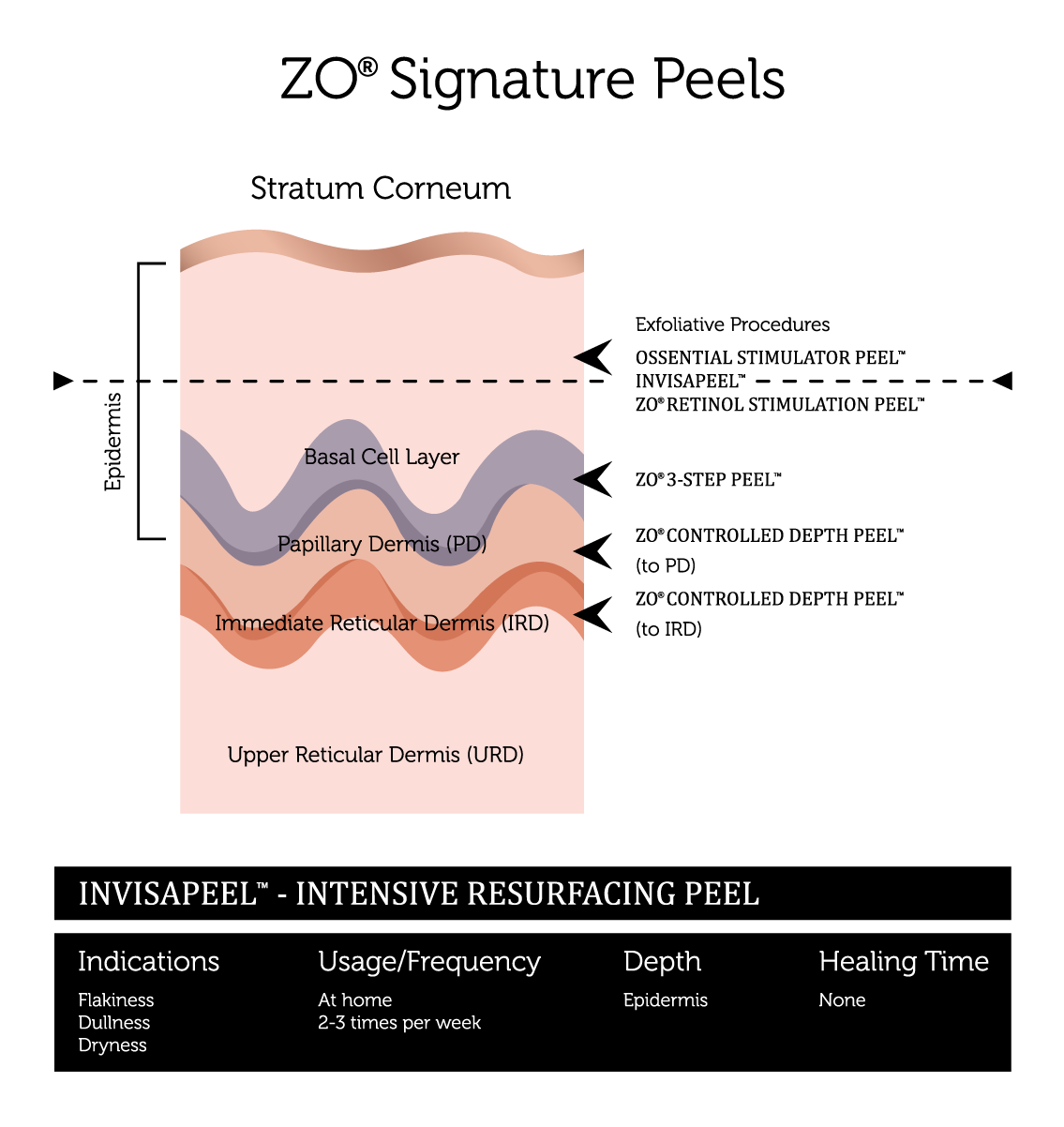
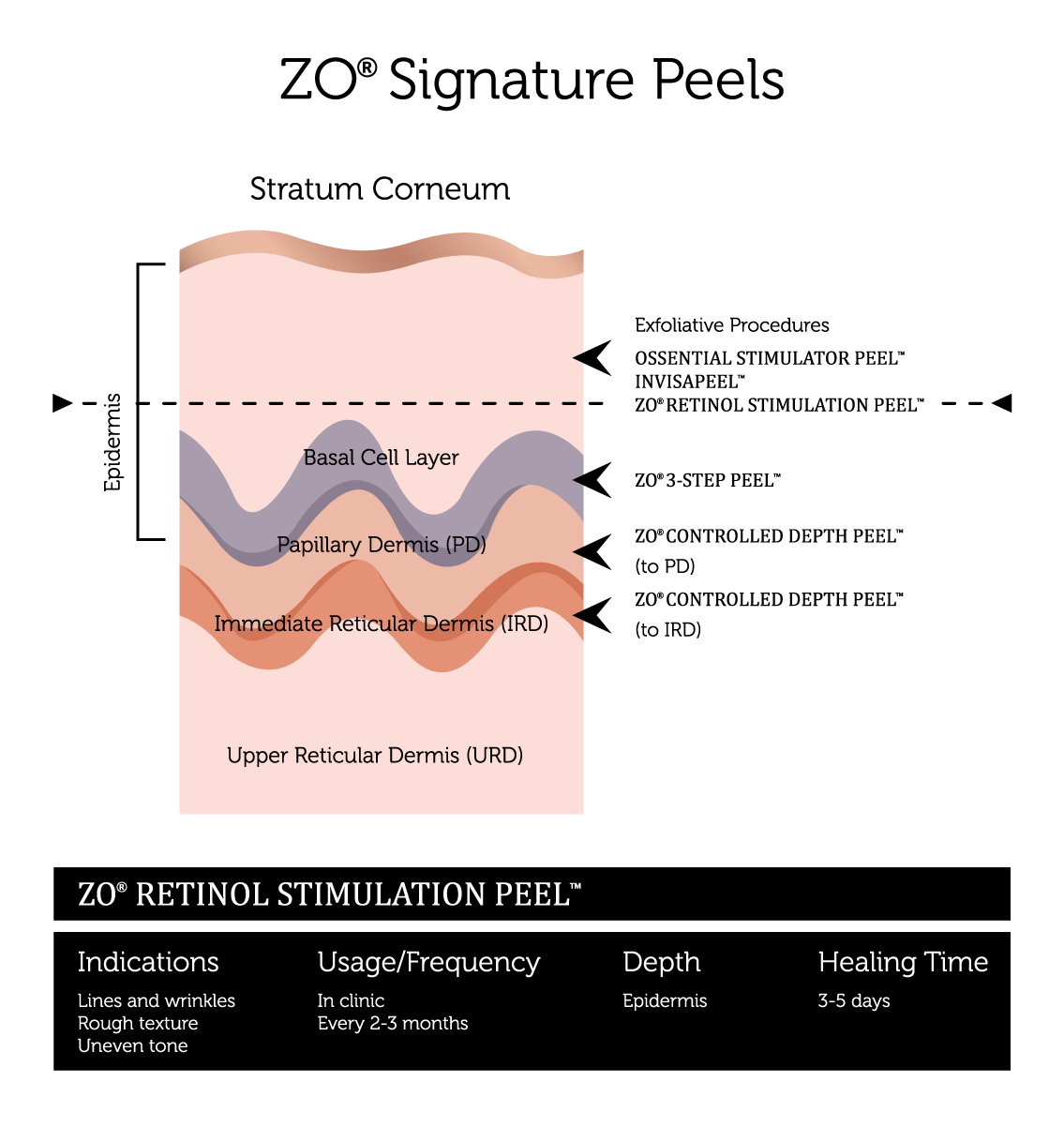
After performing an accurate assessment of your skin we will discuss your concerns and formulate a bespoke treatment program with you. We offer chemical peels from the Zein Obagi skin care line – specifically the ZO Invisapeel, ZO Retinol Stimulation Peel, ZO Three Step Peel and the ZO controlled depth Blue Peel. These are mainly trichloroacetic acid (TCA) peels of varying strengths that are also self-neutralising. We will try to make the peel as pain free as possible but are not keen on the use of topical anaesthetics because they can affect the depth of penetration of the peel. Where necessary we will use nerve blocks to help eliminate any discomfort. Processes involved in maintaining good skin health are extremely complex. It is normal for these processes to naturally slow down and become disorganised by the age of 30 years. For the deeper chemical peels, we insist on preconditioning your skin for at least 6 weeks beforehand in order to ensure your skin responds to the peels in the best possible manner to achieve the best possible result.
HydraFacial
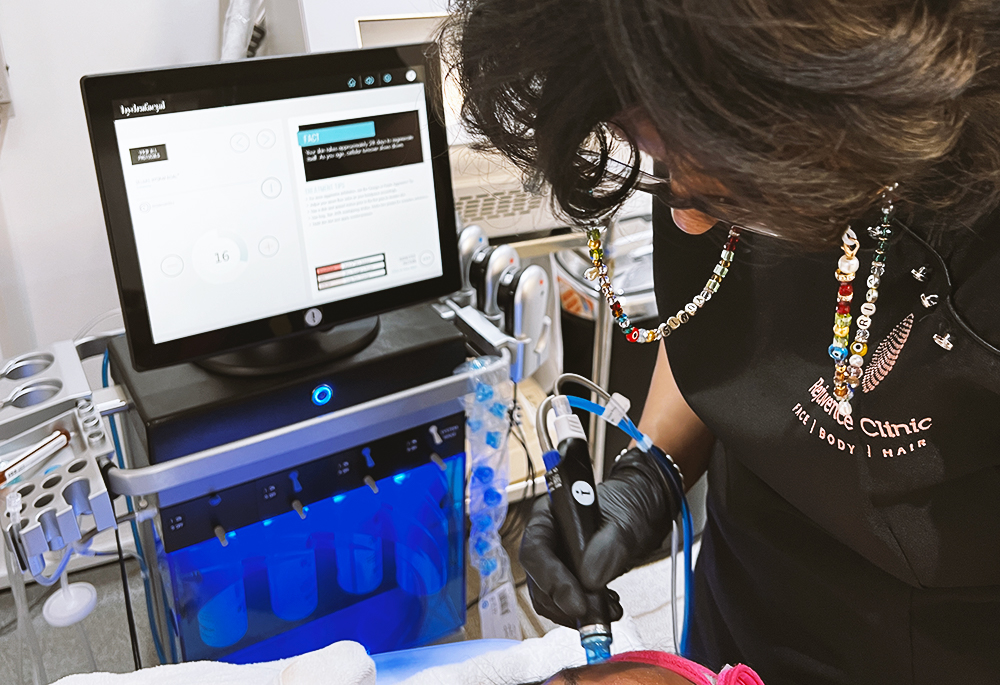
The Hydrafacial is an extremely popular skin treatment that is now available at Rejuvence Clinic.
With a series of treatments, Hydrafacial can transform the quality of your skin. It consists of a four step process. Step one is Cleanse & Peel – a mechanical and chemical exfoliation that helps to nourish and renew skin as well as soften sebum and impurities. Step two is Extraction and Hydration. Step three is Fuse & Protect using specialised antioxidant products and optional Skin Boosters from Zein Obagi or Murad.
Learn more about the Hydrafacial Treatment and what it can do for you here.
Safe and Effective for All Skin Types
One of the most important advantages of the Aerolase laser platform is its ability to safely treat all skin tones, including darker skin types (Fitzpatrick IV, V and VI).
Traditional resurfacing lasers can carry higher risks of pigmentation complications in darker skin. However, the Aerolase technology used at Rejuvence Clinic has been specifically designed to deliver energy in a way that minimises these risks while still achieving powerful skin rejuvenation.
This makes Aerolase laser resurfacing an excellent option for patients seeking advanced skin renewal treatments that remain safe and effective across diverse skin types.
Rejuvence Philosophy
At Rejuvence we have a thorough understanding of the complexities of skin health. We are extremely thorough and are always careful to ensure clients have adequately preconditioned their skin well prior to having deeper more effective chemical peels. We also have experience in treating different skin types and are always mindful of potential side effects. There is no doubt that chemical peels alongside a good skin care program will provide fantastic results.
Chemical peels can be used to improve skin on any part of the body. Chemical peels are commonly used to treat fine lines and wrinkles that are not too deep seated as well as the signs of sun damage. Deeper wrinkles and rhytides can be improved with chemical peels but often alternative approaches are required. Moderate acne scars and hyperpigmentation can also be treated with chemical peels. However, ice pick acne scars do not improve dramatically with chemical peels and often a combination approach is necessary. Following application of chemical peels to the skin the regenerative process that takes place results in an overall tightening of the skin as well as a certain amount of levelling depending upon the strength of the peel and how many layers of the skin it has removed. This results in smoothening of skin. Chemical peels are normally not a one off procedure and required on a semi regular basis to maintain a natural glow.
There is a large body of scientific research available to support the use of chemical peels in skin rejuvenation. Researchers have published evidence detailing the effects of different types of solutions and their strengths on different skin conditions. Much work has also been completed to identify the best treatment combinations for specific skin conditions. Most importantly researchers have identified side effects and rates of scarring associated with different strengths of chemical peels and also identified what skin types are particularly susceptible to scarring and poor results. This has tremendously helped achieve consistent results and avoid poor results.
The stronger the chemical peel the deeper it penetrates and the better the potential results. However, in certain skin types and especially without adequate preconditioning, your skin can react badly to strong chemical peels. Poor technique and a lack of understanding of what type of skin problem is being treated can result in the wrong chemical peel being selected and poor final results. Side effects can include scarring and hyperpigmentation as well as skin infections, and reactivation of herpes simplex if you have had cold sores in the past and not taken antiviral medication. It is important not to pick at skin flakes and scabs after a deep chemical peel as it can result in scarring and infection.
The procedure will last 30 to 40 minutes. The ZO Invisapeel does not require preconditioning and has minimal downtime with a swift return to work. The ZO Retinol Stimulation Peel and ZO Three Step Peel require varying degrees of preconditioning and are associated with a slightly longer downtime. You will be required to take 3 to 5 days off. The ZO controlled depth peel is the deepest and gold standard peel but is associated with a significant downtime and you will need a least 7 to 10 days to recover before going back to work.
After skin has healed you will be left with glowing, refreshed and rejuvenated skin. Scars will be smoother and lighter. Skin will be left tighter and the texture will be smoother. Those suffering with pigmentation problems will have more even colour tone.
Posted on Google
 Sophia12 September 2026
Trustindex verifies that the original source of the review is Google.
A massive thank you to Dr Ghani, Dr Mitha and Olga, who have looked after me for various cosmetic and hair procedure. I highly recommend this clinic to anyone looking for professional, knowledgeable and caring doctors and staff. The reception team are also absolutely lovely, polite, welcoming and friendly.Posted on Google Arpan Kumar11 September 2026
Trustindex verifies that the original source of the review is Google.
The doctor and healthcare professional doing the surgery were lovely and made me feel comfortable throughout the procedurePosted on Google Bisi Dauda11 September 2026What an incredible experience! The modern facilities at Rejuvence Clinic are state-of-the-art. The staff's professionalism and the personalized treatment I received were outstanding. Follow-up care was thorough, and the aftercare support was reassuring.Posted on Google
 THY11 September 2026I can't thank Rejuvence enough for their brilliant service! My steroid injections eased my pain significantly. The team's professionalism and the state-of-the-art facilities were impressive. The follow-up care was just the cherry on top! 🌟Posted on Google
 Jack Ho10 September 2026The nurses are very helpful and Dr Sam Ghani is thoughtful and understands my needs for scar removal.Posted on Google
 Mahamed Hagar10 September 2026Rejuvence Clinic exceeded my expectations! The keloid removal was a breeze, and the staff's professionalism was top-notch. Follow-up care was attentive and reassuring. Truly a fantastic experience from start to finish! Dr Ghani and Paige thank you.Posted on Google
 Tochi Madubuike10 September 2026Absolutely delighted with Rejuvence! The steroid injections were super effective, and the staff's professionalism was evident from start to finish. Their follow-up care was incredibly thorough. I can't recommend them enough for anyone in need!Posted on Google
 Aziah Brown8 September 2026Amazing experience, all the staff are kind and helpful would recommend if need any cosmetic surgery done.Posted on Google
 Daniel Brandão6 September 2026I saw Doctor Sam Ghani for my alopecia problem and he was amazing. The treatment was effective. All the staff is friendly, helpful and professional. Highly recommend.Posted on Google
 Kurt King3 September 2026Dr Ghani was really informative and took the time to answer all of my questions and concerns. I left the clinic feeling like I actually understood my options and could make the right decision about what treatment to have. Really appreciated him taking the time to explain everything properly. I’ll definitely be back and would happily recommend him to anyone considering treatment.